


Solar was mainly about reducing electricity bills. Today, businesses are looking for more.
Rising energy costs, growing concerns about grid reliability and increasing sustainability goals are driving companies to pair solar with battery storage.
Businesses can lower costs and get more value from their investment by storing excess solar energy for later use. That is why commercial solar battery storage is quickly becoming a huge part of modern commercial energy strategies.
Solar remains one of the best investments a business can make to lower electricity expenses. However, solar panels have one limitation. They only produce power when the sun is shining.
For many businesses, energy consumption does not stop when solar production drops.
A warehouse may continue operating into the evening. A retail store may experience high energy use during peak customer hours. A manufacturing facility may run equipment long after sunset.
Without storage, businesses still need to rely on the grid whenever solar production is not enough.
That is where battery storage changes the equation.
Instead of letting excess solar energy go unused, businesses can save it and use it later. This creates a more flexible and efficient energy system that works around business needs rather than daylight hours.
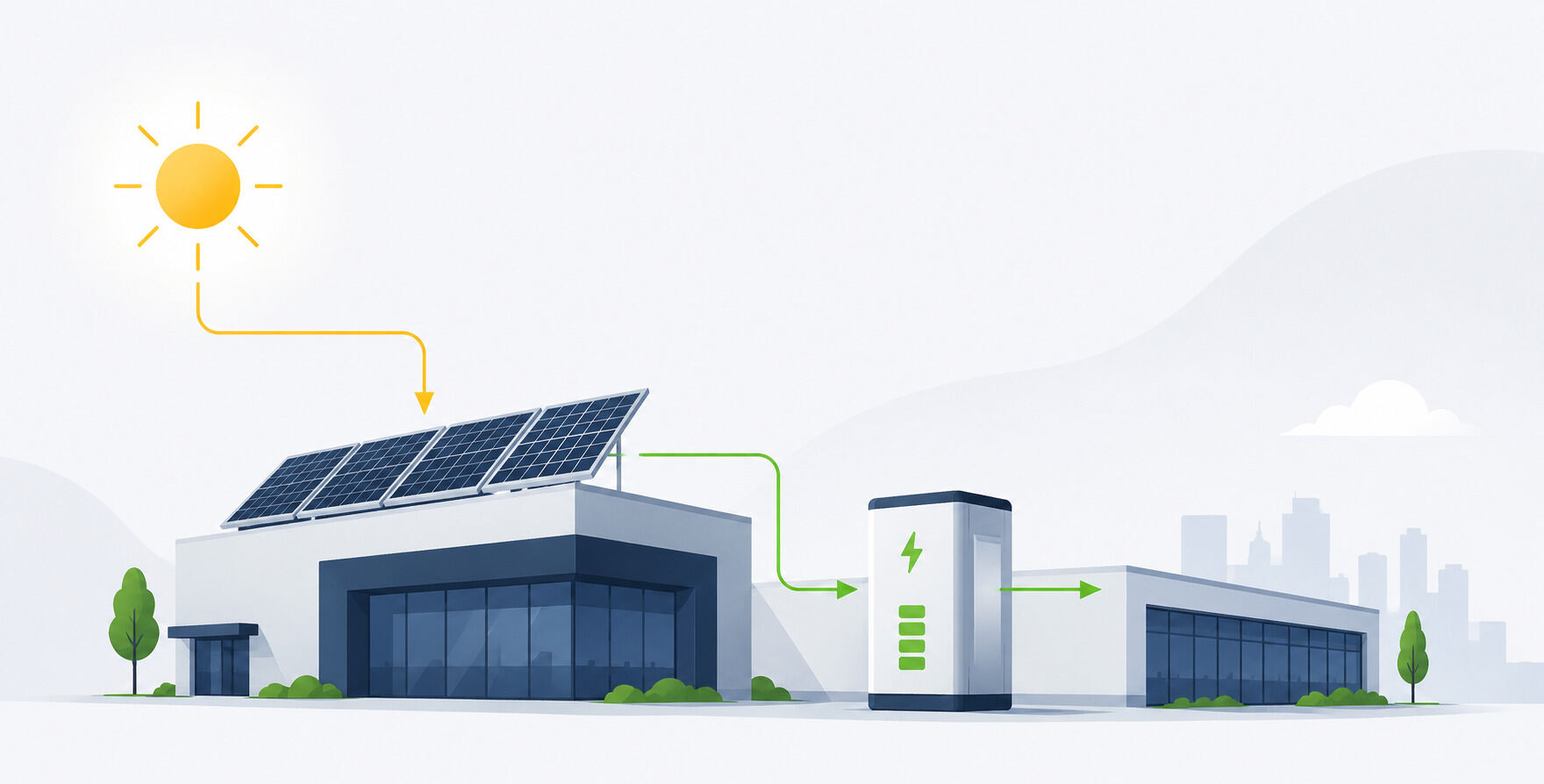
At its simplest, commercial solar battery storage combines solar panels with batteries that store excess electricity.
When a solar system produces more energy than a facility needs, the extra power is stored in a battery rather than being wasted or sent back to the grid.
The stored energy can then be used later when electricity demand increases or when solar production decreases.
Think of it like charging your phone during the day so you can use it later. Battery storage works similarly, except it stores electricity for an entire building or facility.
This gives businesses more control over when and how they use energy.
.png)
So why are more businesses adding battery storage to their solar systems?
The answer is actually pretty simple. Businesses today are dealing with rising electricity costs, unpredictable utility bills, and growing concerns about power reliability. On top of that, many companies are under pressure to meet sustainability goals and reduce their environmental impact.
Solar panels help address some of these challenges, but storage takes things a step further.
With solar plus storage, businesses can save excess solar energy for later, rely less on expensive grid electricity, and keep critical operations running when power disruptions occur. Instead of just generating clean energy, they gain more control over how and when that energy is used.
That combination of savings, reliability, and flexibility is exactly why solar plus storage is becoming the go-to energy strategy for businesses looking to get more from their solar investment.
One of the biggest reasons businesses add storage is simple: it helps reduce electricity costs.
Instead of buying power from the grid during expensive periods, businesses can use the solar energy they have already generated and stored. This lowers utility bills and gives them more control over energy spending.
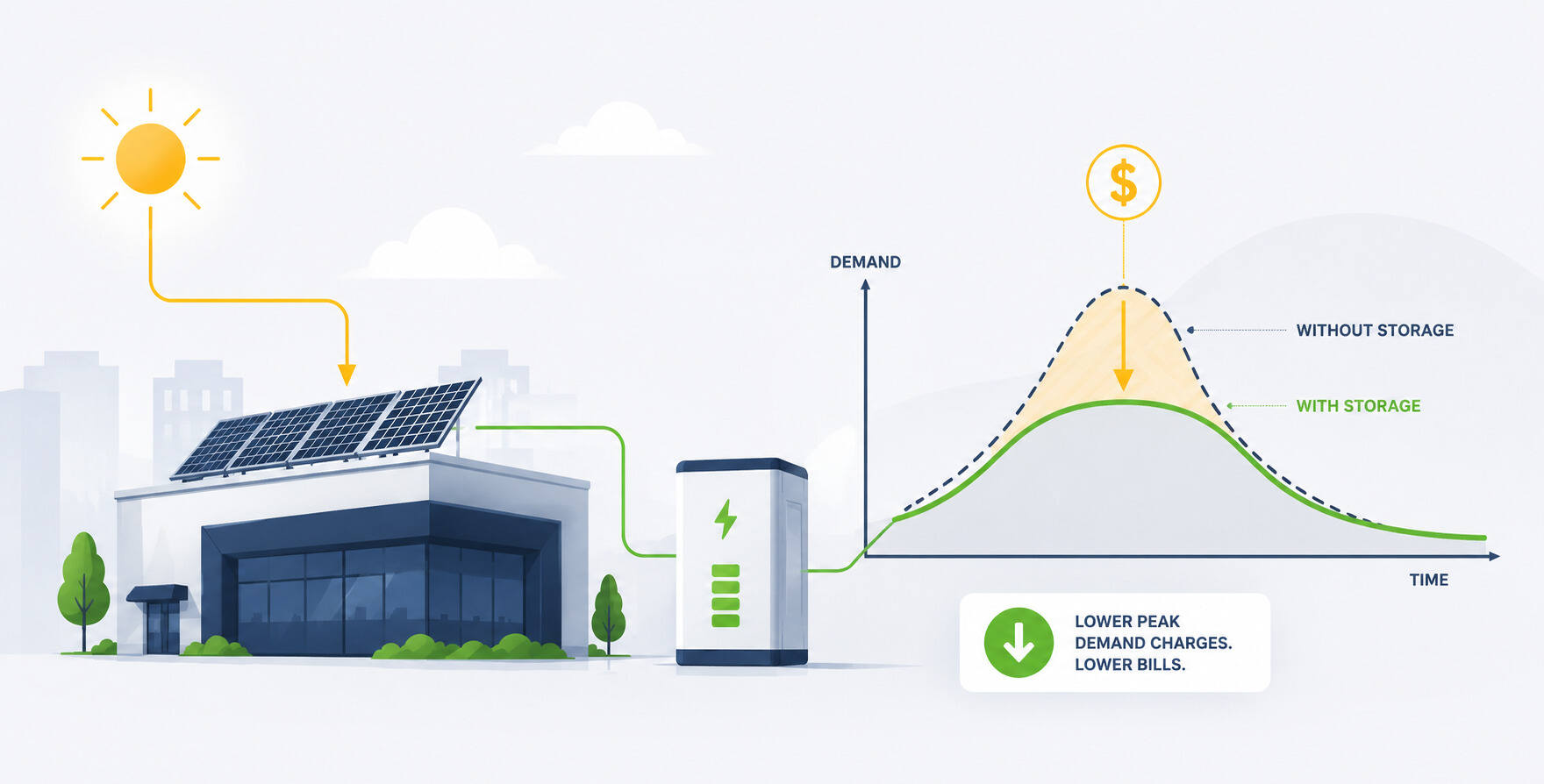
Many commercial electricity bills include demand charges, which are based on the highest amount of power used at one time.
Battery storage helps reduce these costly spikes by supplying stored energy when demand is highest. For businesses with large equipment or high energy loads, peak demand charge reduction can translate into significant long-term savings.
Power outages can disrupt operations and quickly become expensive.
With battery storage, businesses can keep critical systems running even when the grid goes down. This added reliability improves business energy resilience and helps minimize downtime when it matters most.
Most solar systems generate excess electricity at some point during the day.
Battery storage allows businesses to save that energy and use it later instead of relying on the grid. The result is better use of solar production and a stronger return on investment.
More businesses are setting ambitious sustainability targets, and solar energy is already helping them reduce emissions.
Companies can use more of their own renewable energy and rely less on grid electricity because of storage. That makes solar plus storage a practical way to support long-term sustainability goals while reducing energy costs.
Imagine a distribution warehouse that operates from early morning until late evening.
During the middle of the day, the solar system produces more electricity than the facility needs.
Without storage, much of that excess power may provide limited value. With battery storage, the excess energy is saved throughout the day.
Later, when employees are still working and electricity rates are higher, the facility can use the stored energy instead of purchasing expensive power from the grid.
The business saves money, reduces demand charges, and relies more heavily on renewable energy.
This is exactly how many businesses are using storage today.
If it feels like battery storage is suddenly everywhere, you're not imagining it.
More businesses are exploring storage today because the economics and technology have improved dramatically over the last few years. Battery costs have come down, electricity prices continue to climb, and energy management systems are becoming smarter and more efficient.
At the same time, many businesses are looking for ways to protect themselves from rising utility costs and unexpected power disruptions. They want more control over their energy use instead of relying entirely on the grid.
Incentives and financing options have also made storage more accessible, allowing businesses to adopt these systems without taking on a large upfront investment.
When you put all of these factors together, it becomes easy to see why energy storage solutions for businesses are gaining momentum. What was once considered a nice-to-have technology is quickly becoming a practical business investment.
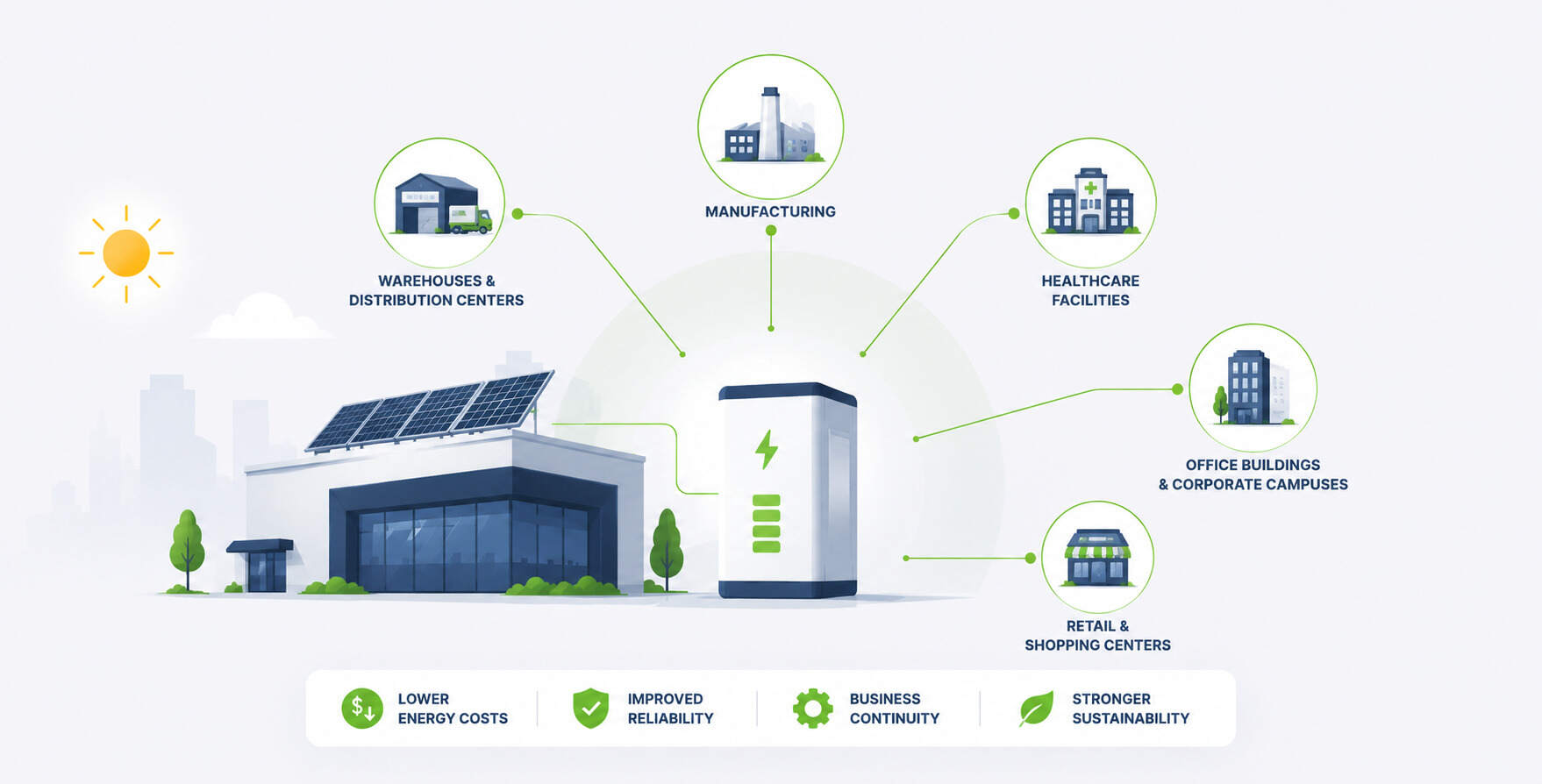
Almost any business with significant electricity consumption can benefit from battery storage. However, some industries are leading the adoption.
• Manufacturing facilities
• Warehouses and distribution centers
• Retail businesses
• Schools and universities
• Healthcare facilities
• Agricultural operations
These businesses often have high energy demands, large facilities or operational requirements that make storage particularly valuable.
For many businesses, the answer is increasingly yes.
The combination of lower electricity costs, reduced demand charges, improved reliability and sustainability benefits creates a strong business case.
Every project is different, and results depend on factors such as energy consumption patterns, utility rates, and battery sizing.
However, as battery technology continues to improve and costs continue to decline, storage is becoming a financially attractive option for a growing number of commercial facilities.
Businesses are no longer viewing battery storage as an optional upgrade.
Many now see it as an essential component of a modern energy strategy.
Ans. Commercial solar battery storage combines solar panels with batteries that store excess electricity for later use. Businesses can then use that energy when solar production is low or electricity demand is high.
Ans. Solar plus storage allows businesses to use stored solar energy instead of purchasing electricity from the grid during expensive periods, helping reduce overall energy costs.
Ans. Peak demand charge reduction occurs when battery storage helps lower a facility's highest electricity demand levels, reducing utility demand charges and monthly bills.
Ans. Yes. Battery systems can supply electricity to critical equipment and operations when grid power is unavailable.
Ans. Manufacturing, warehousing, retail, healthcare, education, and agriculture are among the industries that can benefit significantly from solar and storage systems.
.png)
Businesses today want to maximize every unit of energy they produce while keeping costs under control and operations running smoothly.
That is exactly why commercial solar battery storage is gaining momentum. It helps businesses lower energy costs, reduce demand charges, improve reliability, and make better use of their solar investment.
For solar professionals looking to design efficient and optimized solar and storage systems, ARKA 360 simplifies the process with powerful solar design software.

