


.jpg)
The solar industry is growing fast and honestly, it should feel like a great time to be in this space. More demand and more projects and more awareness should ideally mean more profits.
But that is not what many installers are experiencing right now.
Instead, many businesses are finding it harder to maintain margins even when they have a strong pipeline. And if you look closely, the biggest reason is not just pricing pressure or competition. It is people.
The solar labor shortage is quietly becoming one of the biggest roadblocks to profitability. And when it combines with a skilled installer shortage, it starts affecting everything from timelines to quality to overall business growth.
Let’s walk through what is really happening.
The solar labor shortage is not just about not having enough people. It is about not having the right people at the right time.
Solar projects require a mix of technical understanding and on-site execution and safety awareness. But the number of trained professionals entering the industry is not keeping up with demand.
Because of this, companies are constantly trying to fill gaps while also managing ongoing projects. And that creates pressure across operations.
The skilled installer shortage makes this situation even more challenging.
You can hire more workers but without experience, installations slow down and mistakes increase. Skilled installers bring speed and confidence and problem solving which keeps projects on track.
Without them even simple installations can take longer and require more supervision. And that directly affects efficiency.
.png)
With the solar labor shortage, wages are rising and companies are offering more incentives to attract talent. This means the cost per project increases and unless pricing is adjusted instantly margins start shrinking.
When teams are short projects take longer to complete and delays start piling up. This affects cash flow and client relationships and also limits how many projects a company can handle at once.
Efficiency drops when experienced workers are limited. Teams take longer to complete tasks and require more coordination. This reduces productivity and increases labor hours which directly impacts margins.
Investing in workforce training for solar is necessary but it takes time before new workers become fully productive. During this phase, companies spend more while getting less output which affects short term profitability.
When teams lack experience, errors become more common. Fixing those errors takes additional time and resources. This not only increases costs but also affects customer satisfaction.

The process of hiring solar technicians has become far more competitive and time consuming than before and companies are feeling this pressure every day. It is no longer just about filling open roles but about finding people who are reliable and skilled and ready to perform on-site.
At the same time, businesses are also trying to retain their existing workforce because losing trained employees means starting from scratch again.
This creates a constant cycle of hiring and rehiring which increases operational stress. To stay competitive, companies are offering higher salaries and better incentives and improved working conditions.
While this helps attract talent, it also raises fixed costs significantly. Over time these rising costs start affecting overall margins especially when project pricing does not increase at the same pace.
In simple terms, hiring is no longer a one-time effort and it has become an ongoing challenge that directly impacts profitability.
Managing costs in solar projects now requires much more precision and planning because workforce dynamics are constantly changing. With unpredictable availability of workers and rising wage expectations, labor cost management PV has become harder to control and even harder to forecast accurately.
Companies can no longer rely on fixed estimates because actual labor needs often vary from project to project. Even a small gap in planning such as underestimating installation time or overestimating team efficiency, can lead to significant cost overruns. These extra costs usually come from extended solar project timelines or the need to bring in additional workers at higher rates.
As a result, profitability becomes more sensitive to planning accuracy. Businesses that do not track labor performance closely or adjust plans in real time often struggle to maintain healthy margins. This makes cost management not just an operational task but a critical part of the overall business strategy.
There are a few clear reasons why the gap between demand and workforce continues to grow and it all comes down to speed and readiness. The demand for solar is rising very quickly as more homes and businesses are adopting clean energy and more projects are being approved and installed across regions.
However, the workforce is not growing at the same pace. Awareness about careers in solar energy is still limited, and many potential workers are unaware of the opportunities available in this field. At the same time, training infrastructure is not scaling fast enough to meet industry needs which slows down the entry of skilled professionals.
Another important factor is that solar technology is evolving constantly and workers need continuous learning to stay updated. This makes workforce development more complex and time intensive.
Due to these factors, demand continues to outpace workforce growth.
Building internal talent through workforce training solar is one of the most reliable ways to reduce dependency on external hiring.
Planning helps align projects with available teams and reduces last-minute pressure.
Clear processes make it easier for teams to follow consistent workflows and reduce dependency on individual expertise.
Using digital tools can simplify planning and reduce manual effort which helps teams work faster and more accurately.
Keeping skilled workers is just as important as hiring them. A stable team improves consistency and reduces hiring pressure.
Tracking performance and improving allocation helps control costs and maintain margins.
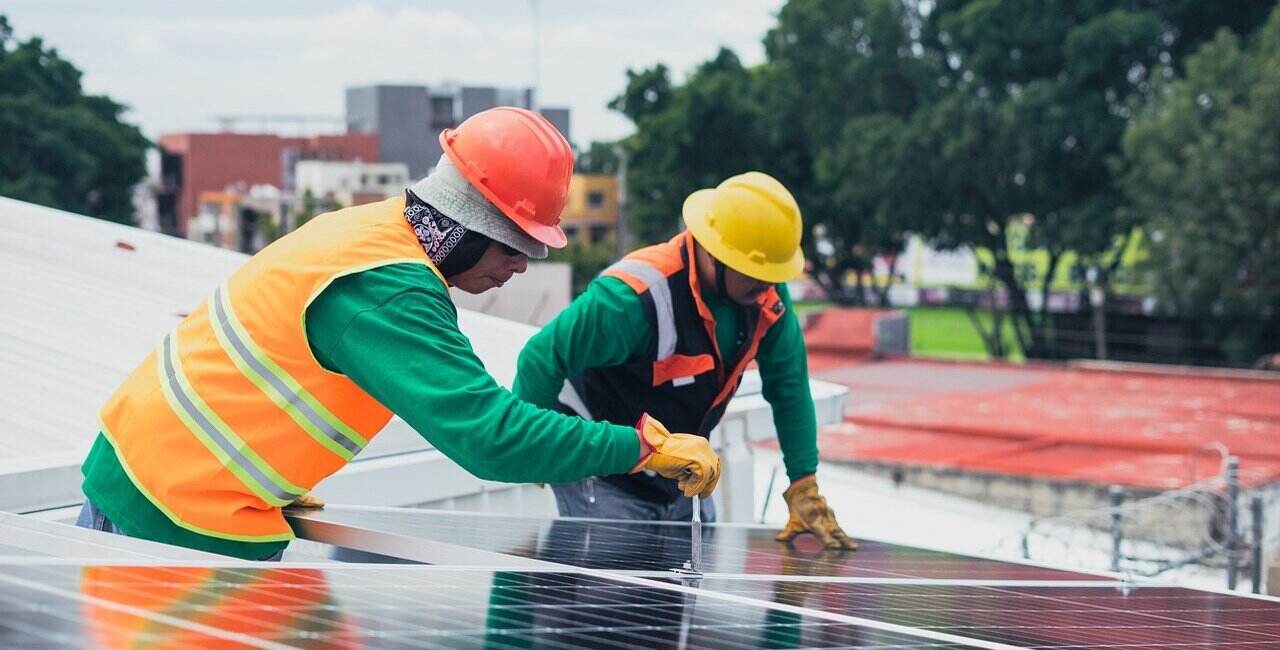
The solar labor shortage is not going away immediately and that is something the industry is already accepting. But the way companies respond to it is starting to change and that is where things get interesting.
More businesses are now focusing on building their own talent instead of depending only on the market. Structured workforce training solar programs are slowly becoming a core part of operations and not just an optional effort. Companies that are doing this are already seeing better team stability and more predictable execution.
At the same time, the skilled installer shortage is pushing companies to rethink team structures. Instead of relying only on highly experienced installers, many are creating layered teams where a few experts guide semi-skilled workers. This approach is helping improve scalability without compromising quality.
Technology is also stepping in to make things easier. Better planning tools and simplified workflows are helping teams work more efficiently which supports stronger labor cost management.
Another shift that is clearly visible is the focus on retention. Companies are putting more effort into keeping their best people because constant hiring of solar technicians is no longer sustainable.
Overall, the solar workforce gap will reduce over time but it will not disappear completely. The companies that invest in training and smarter processes today are the ones that will stay ahead tomorrow.
Q. 1 What is the main reason behind the solar labor shortage?
Ans. Rapid growth in solar demand while workforce supply and training infrastructure are not scaling at the same pace.
Q. 2 How does the skilled installer shortage affect projects?
Ans. It slows installation timelines and increases errors which leads to higher rework costs and reduced overall project efficiency.
Q. 3 Why is hiring solar technicians becoming difficult?
Ans. High competition for a limited talent pool means companies must offer better salaries, benefits and conditions to attract skilled workers.
Q. 4 How does workforce training in solar help?
Ans. It helps companies build reliable internal talent pipelines and reduces long term dependence on external hiring and unstable workforce availability.
Q. 5 What makes labor cost management PV challenging?
Ans. Fluctuating labor availability and rising wages make accurate cost estimation difficult which often leads to unexpected project cost overruns.
Q. 6 Can technology reduce labor challenges?
Ans. Yes, technology improves planning accuracy, reduces manual work, minimizes errors and helps teams complete projects faster with better efficiency.
.png)
The solar labor shortage is no longer just an operational issue and it is directly affecting profitability across the industry. From rising costs to delays and inefficiencies, the impact is visible at every stage.
But the good part is that companies are not powerless here.
By focusing on workforce training in solar and improving processes and being smarter about hiring solar technicians and strengthening labor cost management, businesses can take back control of their margins.
And this is where better planning becomes a real advantage. With the help of advanced solar design software like ARKA 360, companies can reduce errors and streamline workflows and make installations more efficient.
In a market where labor is becoming the biggest constraint, the winners will be the ones who learn how to do more with the teams they have.

