


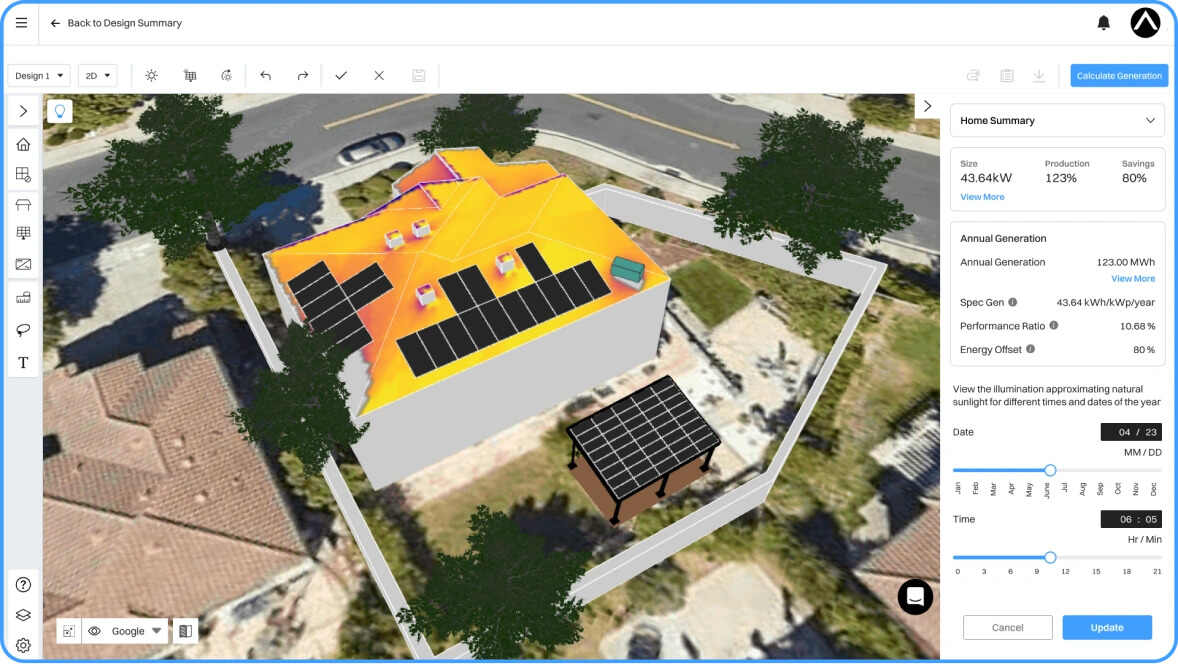
Solar sales are no longer driven only by numbers and promises. Today customers want to see before they decide. They want clarity and confidence and proof that solar will truly work for their home or business. This shift is exactly why 3D solar proposal visualization has become one of the most powerful tools in modern solar sales.
Earlier solar proposals were filled with charts and tables and flat drawings that required explanation. Customers often felt confused and uncertain even when the solution was right. Now with 3D visuals, solar companies can present projects in a way that feels real and familiar. Customers can see the panels on their roof and understand shading and visualize long term value.
3D proposal visualization helps solar companies close more deals by presenting projects through realistic and interactive models that customers can instantly understand. These visuals improve trust and reduce confusion and shorten decision time which makes 3D proposal tools essential for modern EPC sales workflows.
Solar customers today are more informed than ever. They research options and compare providers and ask detailed questions. At the same time, solar remains a long term investment which means hesitation is natural. Customers want to be sure before committing.
This is where 3D solar proposal visualization plays a major role. Visual proposals remove uncertainty because customers can see exactly what they are getting. Instead of imagining outcomes, they experience them visually.
Design driven expectations have also increased across industries. Homebuyers view 3D property tours and homeowners preview renovations digitally. Solar customers now expect the same level of clarity. Flat proposals feel outdated and incomplete.
Competition is another key driver. As more EPCs enter the market, polished and professional proposals help companies stand out. A visually rich proposal signals credibility and technical strength.
Technology has also caught up. AI powered tools and cloud platforms have made advanced visualization faster and more affordable. What once required specialists can now be done in minutes. This combination of demand and accessibility is pushing the industry toward visual-first selling.
The process begins with building an accurate 3D representation of the site. Roof structures are automatically created using satellite imagery, lidar scans or drone data. These inputs allow the system to understand roof shape, pitch height and orientation.
Advanced modeling also identifies roof materials and surface characteristics. This creates a realistic foundation that reflects real world conditions. Accurate modeling early in the process reduces design changes later and builds trust with customers.
Once the roof model is ready, panels are placed directly onto the 3D surface. This placement is not random. It considers available space and roof geometry and panel dimensions.
Tilt angle, azimuth and spacing are visualized clearly so customers understand why panels are placed a certain way. Fire code setbacks and access pathways are also shown which adds transparency and professionalism.
This step helps customers feel confident that the design is both safe and optimized.
Shading is one of the biggest concerns in solar adoption. Trees near buildings and roof obstructions can all impact production. 3D visualization simulates these elements accurately.
Tree detection and obstruction modeling show how shadows move throughout the day and across seasons. Hourly shading analysis makes energy expectations realistic instead of optimistic.
Customers appreciate this honesty because it shows the company is focused on long term performance not just selling.
The final step turns technical models into customer friendly visuals. Daylight renders show how the system looks under real conditions. Clean perspectives and simple views make the proposal easy to understand.
These visuals are embedded into proposals so customers can review everything in one place. The result is a proposal that feels intuitive and engaging.
Trust grows when customers can see clearly. Interactive solar proposals remove guesswork and assumptions. Customers understand layout decisions and shading impacts visually. When there are fewer unknowns, customers feel more comfortable moving forward.
Visual proof speeds up decisions. Customers quickly understand feasibility and expected outcomes. ROI discussions become clearer when paired with visuals. This is especially helpful for customers with low or no credit who want reassurance before committing.
3D proposals feel modern and advanced. They show that a company invests in quality and accuracy. This professional image builds confidence and sets EPCs apart.
Clear visuals reduce misunderstandings. Customers request fewer changes because they understand the design upfront. This saves time for both sales teams and customers.
People naturally process visual information faster than written explanations. When customers see a system instead of reading about it, their brain needs less effort to understand the idea. This is why 3D solar design psychology plays such a strong role in solar sales.
Solar projects involve technical concepts like roof angles, shading and system layout. When these are explained only through text or numbers, customers feel overwhelmed. Visuals simplify the message and make complex information feel approachable.
3D visualization also removes ambiguity. Instead of imagining how panels might look, customers see the actual placement on their own roof. This clarity reduces uncertainty and lowers anxiety which is common when making a long term investment.
Another important factor is emotional connection. Seeing the system in their home or business creates a sense of ownership. Customers start picturing the finished installation and the benefits that come with it. This emotional engagement increases confidence and commitment especially in home improvement decisions where trust matters deeply.
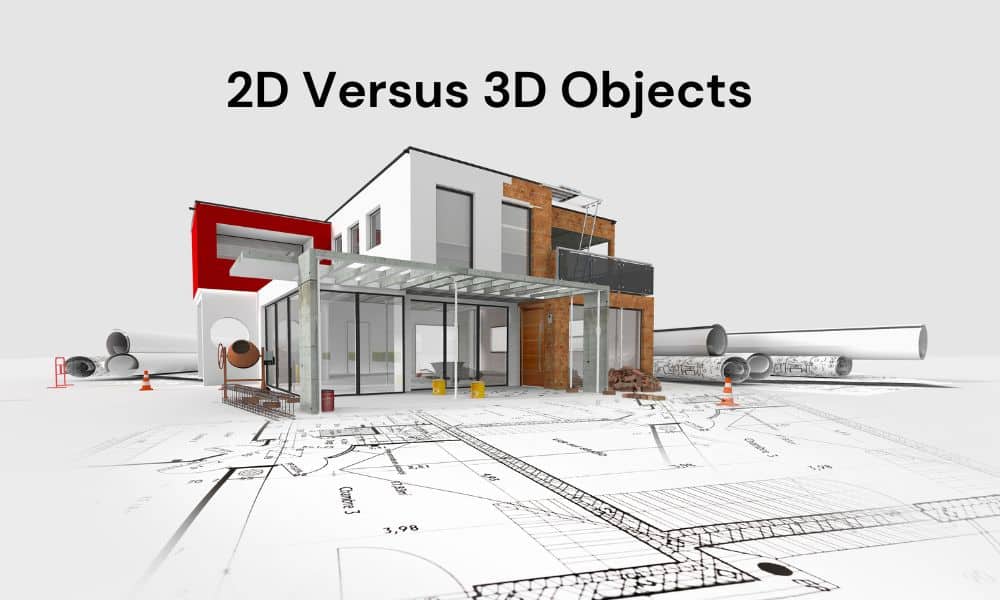
Accuracy is one of the biggest differences between 2D and 3D proposals. 3D models capture roof pitch, slope, ridges and obstructions in a realistic way. This means designs reflect real site conditions from the start.
2D layouts often rely on assumptions. Important details can be missed which may lead to redesigns later. These surprises reduce trust and slow down projects.
Shading is difficult to explain in flat drawings. 2D proposals struggle to show how shadows move throughout the day and across seasons.
3D simulations solve this problem by showing shading visually. Customers can see why certain areas are avoided and how production is affected. This builds realistic expectations and prevents disappointment later.
Presentation quality matters. 3D proposals look modern and polished which aligns with customer expectations in a digital world. They signal that the company uses advanced tools and pays attention to detail. 2D proposals feel basic in comparison and may create doubt even if the design is technically sound.
2D proposals are functional but limited in accuracy and customer comprehension. 3D proposals provide realistic visualization, better shading clarity and stronger customer impact which leads to faster approvals and fewer redesigns.
Speed matters in solar sales. As soon as a lead is created, a 3D model can be generated automatically. Sales teams do not need to wait for manual drawings or long preparation.
This fast response keeps momentum high and shows professionalism early in the conversation.
Once the design is ready, it flows directly into the proposal. Layout, shading analysis and yield estimates are all connected. This reduces manual data entry and minimizes errors. Proposals can be created quickly while maintaining accuracy.
Customers can interact with visuals instead of passively reviewing documents. They can explore different layouts and compare equipment options. Financing scenarios can also be adjusted easily which helps address budget concerns and credit limitations during the discussion.
When customers request changes to designs, updates are made instantly. There is no need to start over or delay responses. This keeps conversations moving forward and reduces frustration for both sales teams and customers.
AI simplifies the most time-consuming part of design, which is roof modeling. It automatically generates roof geometry and detects obstructions like vents and skylights. This improves accuracy while saving hours of manual work.
AI-powered shading analysis delivers precise results quickly. It can process complex environments and calculate shading impacts efficiently. This allows sales teams to update designs in real time during customer conversations.
AI also helps customize proposals. It generates charts, descriptions and financial scenarios automatically based on design data. Sales teams can focus on understanding customer needs instead of creating documents manually.
Homeowners rely heavily on visuals. Seeing panels on their own roof builds confidence and removes doubt. 3D visuals help homeowners understand design choices and feel comfortable moving forward.
Commercial and industrial projects often involve complex rooftops and multiple decision makers. 3D visuals simplify communication and reduce misunderstandings. They help align stakeholders by showing the same clear picture to everyone involved.
Consistency is important for companies operating across regions. 3D visualization ensures proposal quality remains uniform regardless of location. This strengthens brand perception and trust.
Teams handling many proposals need speed and consistency. Visual tools reduce repetitive explanations and speed up deal cycles. This helps teams scale without sacrificing quality.
3D visualization depends on accurate input data. Poor imagery or outdated maps can affect model quality. Teams also need proper training to use tools effectively. Without it, advanced features may go unused.
Some customers still prefer simple summaries. Visuals should support clear explanations rather than replace them entirely.

When evaluating tools, focus on solar proposal visualization features that fit real sales workflows. High quality rendering is essential for clarity and trust.
AI roof modeling and accurate shading simulation are key for speed and reliability. White labeled proposals help maintain brand consistency.
Interactive and mobile-ready experiences are now expected by customers. Scenario comparisons are especially useful for addressing different budgets and credit situations.
Q1) Do 3D proposal visuals improve solar sales conversions?
Ans. Yes 3D solar proposal visualization improves customer understanding and trust. This leads to faster decision making and higher solar sales conversion rates.
Q2) Are 3D solar proposals accurate for C and I solar projects
Ans. Modern 3D solar proposals accurately model complex commercial rooftops. They support precise design planning for large scale C and I installations.
Q3) Can 3D solar visualization replace physical site visits?
Ans. 3D solar visualization reduces the need for early site visits significantly. Final site verification may still be required before system installation.
Q4) Is AI required for high quality 3D solar proposal?s
Ans. AI powered tools improve accuracy, speed and consistency in 3D solar design. They also streamline proposal creation for solar sales teams.
Q5) Are 3D solar proposal tools cost effective for EPCs
Ans. Most 3D solar proposal tools reduce costs by minimizing redesigns. They also shorten sales cycles and improve overall EPC efficiency.
.png)
3D solar proposal visualization is redefining how solar is sold. By combining realistic layouts, accurate shading and interactive proposals, EPCs communicate value more clearly and build confidence faster. This is especially important for customers with limited credit because visuals reduce uncertainty and perceived risk.
For sales teams, 3D proposals are no longer optional. They are the new standard. ARKA 360 supports this shift by connecting design and proposals into one seamless workflow. Investing in the right solar design software can significantly improve close rates and modernize the entire solar sales experience.

