


For more than 100 years, coal has been the backbone of global electricity generation. It powered industries, cities, factories and economic growth across the world. Renewable energy, on the other hand, was seen as an alternative solution that would take decades to become mainstream.
But 2025 changed that conversation completely.
For the first time in modern history, renewable energy officially generated more electricity globally than coal. At the same time, solar became the fastest-growing source of electricity worldwide.
This is not just another industry milestone. It marks a major turning point for the global energy sector and creates a completely different future for solar EPC companies.
The solar industry is no longer operating in an “emerging market” phase. We are entering a period where solar energy is becoming one of the world’s primary electricity sources. That shift will impact everything from project demand and customer expectations to proposal workflows and storage planning.
According to Ember’s Global Electricity Review, renewables generated 33.8% of global electricity in 2025 while coal dropped to around 33%.
The difference may look small on paper, but the long-term significance is enormous.
For decades, coal represented stability and scale in the energy market. Renewable energy was often discussed as the future, but many industries still questioned how quickly it could realistically replace fossil fuels.
Now the market is beginning to answer that question.
Solar, wind, hydro, and battery storage are no longer supporting technologies. They are becoming central to how countries plan future energy infrastructure.
This transition is happening because electricity demand is rising rapidly around the world. AI infrastructure, data centers, electric vehicles, manufacturing growth, and electrification are all increasing pressure on existing power systems. Governments and businesses are now investing heavily in renewable energy because it is becoming one of the fastest and most scalable ways to meet that demand.
.png)
One of the biggest reasons behind this shift is the explosive growth of solar energy.
The International Energy Agency reported that solar PV became the largest contributor to global energy demand growth in 2025. Global solar generation increased by roughly 600 terawatt-hours in a single year, making it one of the largest annual increases ever recorded for any electricity technology.
Several factors are accelerating this growth at the same time.
Solar installation costs continue to decline in many markets while electricity prices remain volatile. Businesses are looking for more energy independence and predictable operating costs. Governments are expanding clean energy targets and incentives. Battery storage adoption is also increasing rapidly, making solar more reliable and flexible than before.
At the same time, entirely new forms of electricity demand are emerging.
AI and data centers now require enormous amounts of power, and utility providers are struggling to keep up with future demand forecasts. This is creating massive opportunities for renewable energy deployment globally.
As a result, solar is no longer competing only on sustainability. It is increasingly competing on economics, scalability, and speed of deployment.
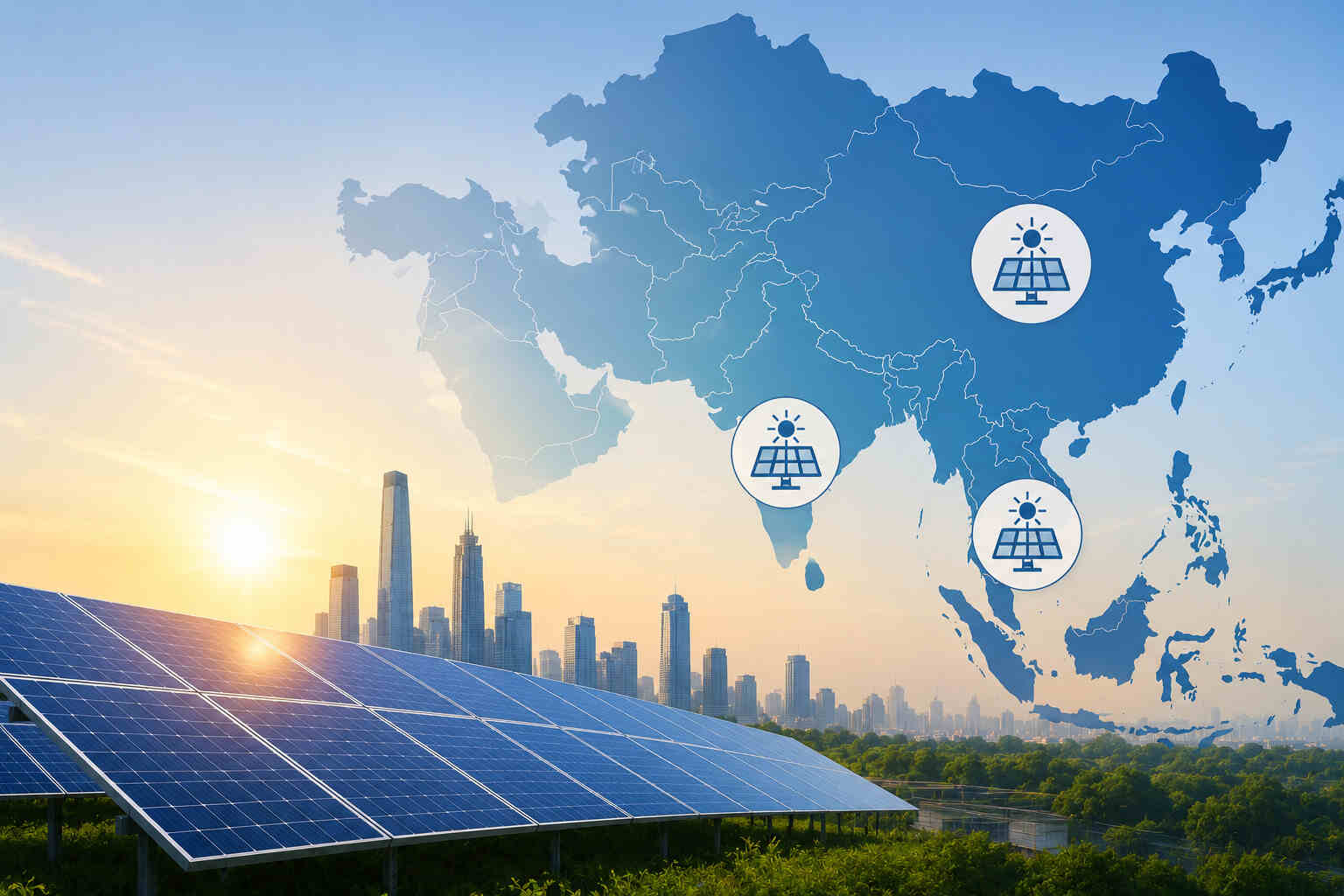
One of the most interesting parts of this transition is where the growth is happening.
Historically, many Asian economies relied heavily on coal-powered electricity. Today, some of those same countries are leading global solar deployment.
China continues to dominate renewable energy expansion and added record amounts of solar capacity during 2025. India also saw strong renewable growth as investments in solar infrastructure accelerated.
This trend matters because electricity demand across Asia is expected to continue rising rapidly over the next decade.
For solar EPC companies, this creates a major business opportunity. But it also increases pressure to scale operations more efficiently.
As the market grows, customers are expecting:
The companies that can move faster while maintaining quality will likely gain a strong competitive advantage.
Another major industry shift happening alongside renewable growth is the rapid adoption of battery storage.
Customers are no longer looking only at solar panel installations. Many residential and commercial buyers now expect energy storage to be part of the conversation from the beginning.
This is happening because businesses and homeowners want more control over how they use electricity. Rising utility prices, grid reliability concerns, and increasing power outages are making storage solutions more attractive than ever.
As a result, EPC companies are now designing more projects that include:
This changes how solar projects are designed and sold. Storage integration requires more planning, more accurate energy analysis, and more detailed proposal workflows.
Even with strong momentum behind renewable energy, the industry still faces several operational challenges.
Grid infrastructure remains one of the biggest obstacles in many regions. Existing transmission systems were not originally built for large-scale distributed renewable generation. As more solar projects come online, some markets are experiencing grid congestion, interconnection delays, and renewable curtailment.
Permitting also continues to slow down projects for many EPC companies. Long approval timelines can increase soft costs, delay installations, and impact customer satisfaction.
At the same time, many solar companies are struggling with operational scaling. As project demand increases, manual workflows can quickly become bottlenecks.
Common challenges include:
As competition increases, operational efficiency will likely become just as important as installation capacity.
The renewable energy industry has clearly entered a new phase.
For the first time in modern history, coal is no longer the world’s leading electricity source. Solar energy is now one of the primary drivers of global electricity growth, and adoption continues accelerating across residential, commercial, and utility markets.
For solar EPC companies, this creates enormous opportunities but also much higher expectations.
Project volumes are increasing, customers expect faster turnaround times, and solar plus storage systems are becoming more common across the industry. At the same time, EPCs are dealing with tighter timelines, more complex project planning, and growing competition.
The companies that adapt fastest will likely have the biggest advantage in the years ahead.
That is why efficient workflows, automation and collaboration are important for modern EPC operations. Having the right solar design software can help teams manage proposals faster, improve design accuracy, simplify revisions, and handle larger project volumes more efficiently.
Because solar is no longer just part of the future energy conversation.
It is becoming one of the foundations of the global power industry.

