
Back
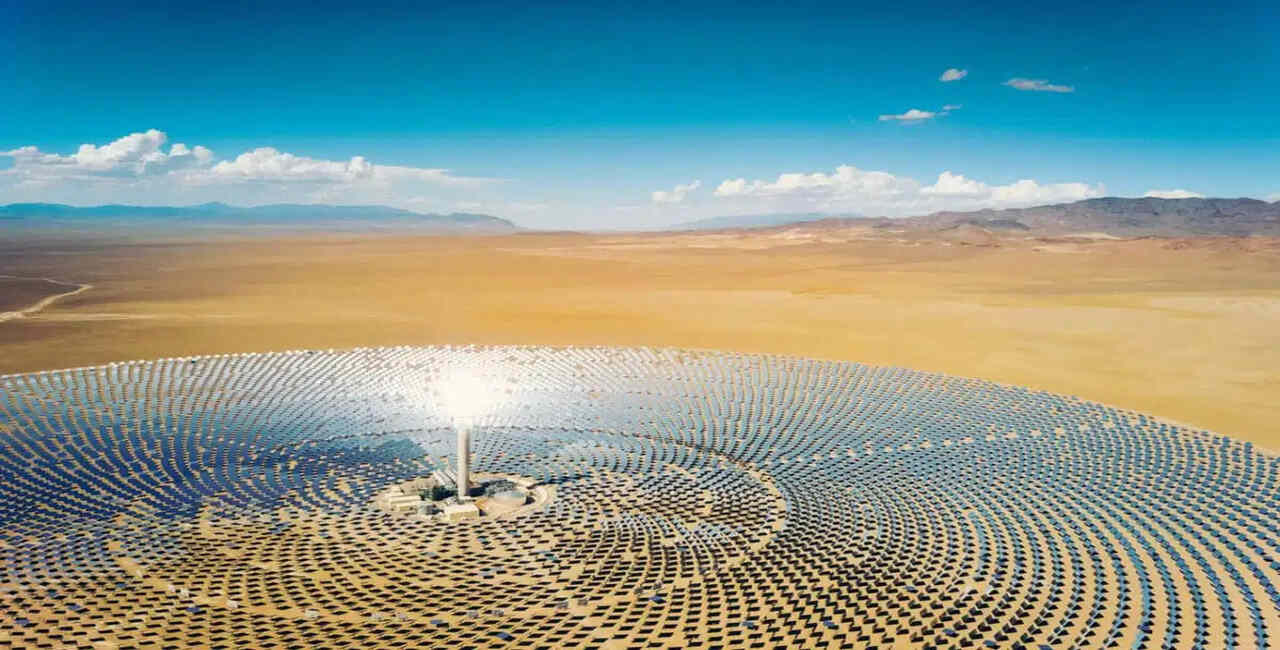
Solar energy performs best under bright sunlight and open skies and that is exactly what desert regions offer. So at first glance, deserts seem like the perfect place for solar power plants. However, once you step into the reality of desert solar design, you realize that extreme heat and sand and wind and harsh weather create serious technical and operational challenges.
Across regions facing Middle East solar challenges, developers and EPC companies are learning that designing solar systems for hot and desert climates is not just about installing more panels. It is about understanding high temperature PV performance, managing solar derating temperature, and adapting every element of solar design to hot climates to survive and perform in extreme conditions.
In this blog, we will break down the real design challenges of solar projects in deserts and explain how to overcome them in a practical and structured way.
Deserts receive some of the highest solar irradiation levels in the world. Countries such as Saudi Arabia and the United Arab Emirates and Egypt and parts of India have vast open land and strong policy support for renewable energy.
Projects in places like Saudi Arabia and the United Arab Emirates show how governments are investing heavily in large-scale solar infrastructure. High irradiation means higher potential generation and lower levelized cost of energy over time.
But sunlight alone does not guarantee efficiency. In fact, when temperatures cross 40 degrees Celsius and module surface temperature climbs even higher the actual output of solar panels drops significantly. This is where the complexity of desert solar design begins.
Solar panels are tested under Standard Test Conditions which assume a cell temperature of 25 degrees Celsius. However, in desert regions, module temperature can easily exceed 65 degrees Celsius.
This difference directly impacts high temperature PV performance.
Every solar panel has a temperature coefficient. This coefficient tells us how much the output power decreases for every degree increase above 25 degrees Celsius. For example, if the temperature coefficient is minus 0.4 percent per degree, then a 20-degree increase can reduce output by around 8 percent.
Now imagine operating at 40 degrees above standard conditions. The losses become substantial. Therefore, in hot climates engineers must calculate real world operating temperatures instead of relying only on standard test data.
This is where the concept of solar derating temperature becomes critical.
Solar derating temperature refers to the reduction in power output due to elevated temperatures. In desert projects, derating is not a small adjustment. It can significantly impact financial modeling and return on investment.
When designing a solar plant in a desert region, engineers must:
Ignoring solar derating temperature during system planning can result in overestimated energy yield and disappointed investors.
In large-scale projects across the Middle East, this has become one of the most important Middle East solar challenges because financial institutions now demand accurate generation modeling.
Heat is not the only issue. Dust and sand accumulation reduce solar panel efficiency dramatically.
In desert environments, airborne dust settles quickly on module surfaces. Even a thin layer of dust can reduce generation by 5 to 15 percent. In severe conditions, losses can be even higher.
Effective desert solar design must therefore include:
Water scarcity is another challenge in desert regions. Since water is limited, developers must balance cleaning frequency with operational cost and sustainability goals.
In countries like Qatar and Oman, water management becomes a strategic part of solar plant operations.
Extreme heat does not affect only solar modules. It also impacts cables and inverters and transformers and mounting structures.
In hot climates, engineers must select materials that can withstand:
Inverters are particularly sensitive. High ambient temperature can trigger inverter derating or shutdown which directly impacts generation.
Therefore advanced desert solar design includes:
Without these measures, system reliability can drop significantly.
Desert regions are prone to sandstorms and strong winds. This creates both mechanical and operational risks.
Mounting structures must withstand:
Proper structural design is a critical aspect of challenges in the Middle East solar industry. Engineers must conduct geotechnical analysis to ensure foundations remain stable in sandy terrain.
Tracking systems require special attention because moving parts can suffer from sand intrusion. In fixed tilt systems, designers must optimize tilt angle not only for energy yield but also for dust reduction and wind resistance.
Desert regions often experience sharp midday production peaks because of intense sunlight. While this increases generation, it can also create grid stability issues.
Utility operators in regions such asthe United Arab Emirates and Saudi Arabia have implemented strict grid codes to manage high penetration of solar energy.
In a hot climate, designers must account for:
Failure to meet grid codes can delay project commissioning.

Choosing the right module technology is essential in desert solar design.
Key considerations include:
Some bifacial modules can also perform well in desert conditions due to reflected light from sandy surfaces. However rear side performance must be evaluated carefully based on the ground albedo.
Understanding high temperature PV performance during module selection can significantly improve long term output.
Heat increases electrical resistance in cables. As resistance rises, transmission losses increase.
Therefore, in solar design for hot climates, cable sizing must consider elevated ambient temperature. Using standard cable ratings without temperature correction can lead to overheating and safety risks.
Designers must apply temperature correction factors and ensure that cable routing allows for heat dissipation.
This is another area where solar derating temperature calculations influence system efficiency.
Operational planning is just as important as system design.
Desert solar plants require:
High temperature accelerates material degradation. Therefore, preventive maintenance must be more rigorous compared to moderate climate regions.
Desert projects may impact fragile ecosystems. Environmental assessments are mandatory in many regions.
In countries such as Egypt and India, desert solar expansion must align with environmental protection regulations.
Developers must consider:
Comprehensive planning ensures that desert solar design remains sustainable and compliant.
Investors need realistic generation forecasts. Overestimating output due to ignoring solar derating temperature or dust losses can affect revenue projections.
Energy modeling tools must incorporate:
In large utility-scale projects across the Middle East, accurate simulation of high temperature PV performance is essential for bankability.
Technology is evolving to address solar design hot climates challenges.
Innovations include:
Research institutions and developers across regions facing challenges continue to test solutions that improve performance under extreme heat.

Given the complexity of desert solar design, accurate design software becomes essential.
Designers need tools that can:
When dealing with high temperature PV performance and solar derating temperature assumptions, manual calculations are not enough.
Efficient planning ensures that projects in hot regions are technically sound and financially viable.
Q. 1 What is desert solar design and why is it different?
Ans. Desert solar design refers to planning and engineering solar systems specifically for extreme heat and dust and sand conditions. It differs because temperature and soiling and structural stress are much higher than in moderate climates.
Q. 2 How does high temperature affect PV performance?
Ans. High temperature PV performance decreases as module temperature rises because solar panels lose efficiency with heat. Every degree above standard test conditions reduces output based on the temperature coefficient.
Q. 3 What is solar derating temperature?
Ans. Solar derating temperature is the reduction in power output caused by elevated temperatures. It must be calculated during system design to avoid overestimating energy production.
Q. 4 What are the main Middle East solar challenges?
Ans. Middle East solar challenges include extreme heat and dust accumulation and sandstorms and grid compliance requirements which all impact system performance and reliability.
Q. 5 How often should desert solar panels be cleaned?
Ans. Cleaning frequency depends on dust levels and project economics. In high-dust regions, panels may require cleaning every few weeks to maintain optimal output.
Q. 6 Can solar panels work efficiently in hot climates?
Ans. Yes, solar panels work in hot climates but efficiency drops with temperature so system design must account for airflow and module selection and realistic performance modeling.
Solar energy has enormous potential in desert regions because sunlight is abundant and land availability is high. However, designing projects in such environments requires careful attention to desert solar design principles. Engineers must understand high temperature PV performance and calculate solar derating temperature accurately and address structural and electrical and operational complexities.
Regions facing Middle East solar challenges have demonstrated that success depends on precise planning and realistic modeling and durable component selection.
This is where smart planning platforms like ARKA 360 play a crucial role. With advanced solar design software, teams can simulate temperature impact and optimize layouts and generate accurate performance reports so projects in hot and desert climates become more predictable and profitable.